Why Routine Skin Checks Are Essential For Skin Cancer Avoidance
Dermatology Blog Sites This might include a new mole, a spot that's transformed in appearance, or a location that's become scratchy, unpleasant, or hasn't healed properly. If you have actually observed something unusual and desire fast solutions, a test can be a quick and reliable means to identify whether further therapy or tracking is required. However, if you have danger aspects, it's a great idea to review them with your health care provider. If you believe you have melanoma, or if you have actually discovered a suspicious place, sore, or mole on your skin, it is necessary to see a board-certified dermatologic doctor as soon as possible. If you do not have any kind of questionable moles, places, or sores, it's still recommended that you see a dermatologist annually while carrying out month-to-month, in the house skin checks. Early discovery enables less complex, much less intrusive therapy and much better end results. That's why dermatologists worry the relevance of monthly self-exams and yearly expert skin checks. Schedule a skin cancer testing with your skin specialist promptly. Skin cancers-- including melanoma, basal cell Medical skin treatment cancer, and squamous cell carcinoma-- often begin as changes to your skin. They can be brand-new growths or precancerous lesions-- changes that are not cancer cells but could come to be cancer in time. An estimated 40% to 50% of fair-skinned people who live to be 65 will create at least one skin cancer. While self-exams are beneficial, they can not change the know-how of a skin specialist. Some locations, like the scalp, back, or behind the ears, are difficult to examine on your own. Limitation your direct exposure to the sunlight's ultraviolet rays, specifically between 10 a.m . While outdoors, freely apply a broad spectrum sun block with an SPF of 30 or higher (don't fail to remember the lips and ears!), wear a hat and sunglasses, and hide with clothing. And keep in mind, if you observe adjustments to your skin such as a new growth, a mole altering appearance, or an aching that will not heal, see a medical professional appropriate method.
What skin lesions are misinterpreted for cancer cells?
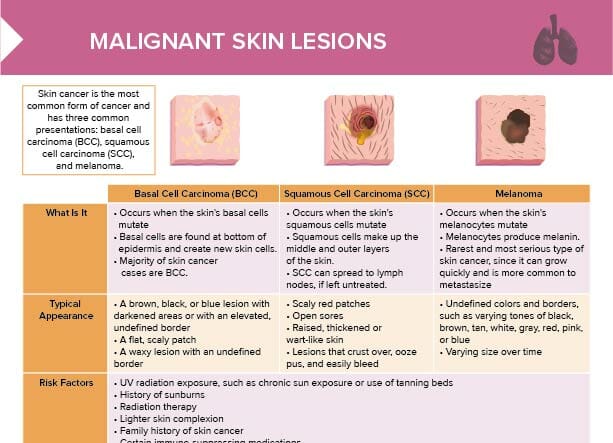
The 3 most typical kinds of skin cancer cells are basic cell carcinoma, squamous cell cancer, and cancer malignancy. Numerous skin conditions may be conveniently misinterpreted for cancer cells, including pimples, age places, moles, skin tags, protuberances, blemishes, dermatitis, psoriasis, and cherry angiomas.
What Takes Place During A Skin Cancer Screening?
Individuals can also bring in previous photos to record exactly how an area has actually altered. Just how much a testing expenses, however, depends on your insurance policy provider, your area, and your insurance coverage strategy. Papules and blemishes are solid, elevated bumps that differ in dimension. We offer a data source of descriptions from genuine doctors on a range of medical subjects. Begin by exploring our library of questions and topics you wish to learn more regarding. If something does not seem right, depend on your instincts and talk with a doctor. It is constantly better to have a professional analysis than to ignore a possibly serious concern.- If you're concerned regarding an area of skin, we can assess it.
- After the slides have actually been processed and identified, the client will be alerted of their results within a week.
- On the various other hand, a full-body skin examination takes longer and is used to screen the whole body for any type of abnormal or questionable places, even in areas that are difficult to see or simple to neglect.
- At Chang Dermatology & Skin Clinic in Virginia Beach, VA, we take very early discovery seriously and customize every examination to your specific requirements.
- If a mole or spot suddenly starts itching, softens, or bleeds without injury, don't overlook it
For Health Care Experts
One of the most typical root cause of skin cancer is ultraviolet (UV) radiation, typically from sun exposure, however you can additionally be exposed to this via tanning beds. That is why it is very essential to wear sun block and safeguard your skin from the sunlight. The AAD urges every person to take actions to prevent skin cancer and identify it early, when it's most treatable. This is especially important for males over 50 as they have an enhanced risk of developing cancer malignancy compared to the general populace. If you go to high risk for skin cancer cells, see a skin doctor at the very least annually for normal testing and surveillance. At the consultation, the skin doctor will analyze your skin head to toe with a gadget called a dermatoscope. The crisp dermatoscope pictures capture subtle changes in skin sores over time so we can detect malignant lesions in their early stages. Even if you haven't previously got a skin cancer cells diagnosis, these checks are vitally important for people with a background of tanning bed usage, blistering sunburns, or a high number of moles. If you have 50+ moles on your body, you're at a higher risk of unseen cancer malignancy. 